Gift Giving: In a clear and concise response, Discuss the role of gifts throughout the novel. Identify 3 and explain what those items might represent and how those help to develop a theme. Consider the items left in the tree. 200 words.
Category Archives: Uncategorized
Blog 7: Symbolism
Explain the role of symbolism in the novel. Choose two symbols and discuss how it helps to develop themes and characters. Cite textual evidence to support your response. 250 words.
Blog 6: Atticus’s Advice

Atticus says, “You never really know someone until you consider things from his point of view… until you climb into his skin and walk around in it.” What does he mean by this and in what instances does Scout learn this lesson? How do you think this advice will help Scout to understand the world in which she lives? What other characters are impacted by this ideology? Make sure your response contains a thesis statement and cited textual evidence. 200 words.
Blog 5: Making Connections
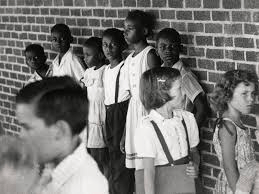
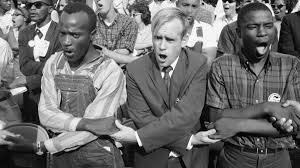
What kinds of parallels can be made between the setting of the novel and the publish date? Use your notes in your notebook to help make connections. Be sure to have a thesis statement and examples to show your reasoning. Use two examples that show these parallels. 150 words.
Blog 4: Gothic Literature
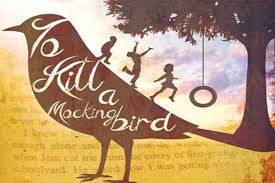
This text is often referred to an American Southern Gothic novel. Research the characteristics of gothic literature. How does the description of the setting help to support the idea that To Kill a Mockingbird is an American Gothic novel? Use details and textual evidence to support your response.
Blog 3: Postmodernism and Critical Thought
This blog has three parts. Be sure to answer all parts.
Part I. Use a summer reading text of your choice and identify at least 2 truths that your text attempts to establish. (Truth is a perception of reality.)
Part II. Choose 5 of the 8 questions below and apply them to a summer reading text of your choice. Be sure to answer each question to the fullest extent and as completely as possible. You must cite textual evidence to support your response.
1. How does the work undermine or contradict generally accepted truths? (see part 1). How does the author (or a character) omit, change, or reconstruct memory and identity?
2. How does a work fulfill or move outside the established conventions of its genre?
3. How does the work deal with the separation (or lack thereof) between writer, work, and reader?
4. What ideology does the text seem to promote?
5. What is left out of the text that if included might undermine the goal of the work?
6. If we changed the point of view of the text – say from one character to another, or multiple characters – how would the story change?
7. Whose story is not told in the text?
8. Who is left out and why might the author have omitted his tale?
Part III: What do you look forward to most during this school year? You may decide to focus on student life or academics or both. I will say that it has been a pleasure getting to know each of you over the work you have been doing. I look forward to an exciting year of endless possibilities.
Blog 2
Introduction: Literary theory is a collection of philosophies that enables a reader to read a text through a certain perspective and find new meaning in a text. When discussing ideas from literary theory, what isn’t present in the text is just as important as what is present. So, for example, if I am reading a text with all-male characters from a male narrator, I might choose to interpret this text through a feminist perspective (feminism meaning total equality for both males and females) to come up with theories as to why there is a lack of female influence on themes.
Directions: Work/Reading before the blog post:
1. Use the following site to learn more about literary theory and different perspectives.
2.You will choose one of the following perspectives: feminism, psychoanalytic, new historicism, postcolonial, or Marxism.
3. Choose either “Fall of the House of Usher” or “To be Taken with a Grain of Salt”
4. Read and learn more about the theory you choose and apply those essential questions to a summer reading text you selected. You will bring your questions to class.
Prompt: In a well-written response, use the theory you choose as a context for interpretation. What arguments can be made about the themes or the characters of your text? You must quote from bothyour theory from the webpage as well as your text. Identify 3 arguments on themes or characters and provide a refutation to one of those arguments. Additionally, you may use examples from society at large to help support your explanation. 250 words.
Blog 1: What Makes a Good Ghost Story?
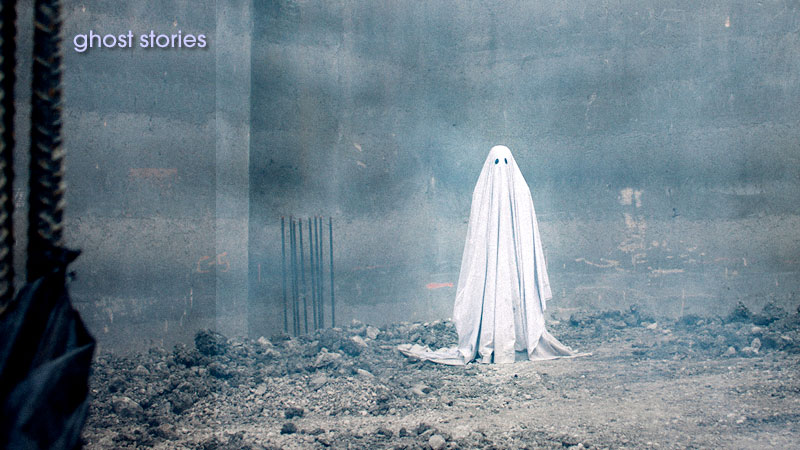
Choose two of the short stories and explain why they make a good ghost story. Consider how the use of imagery, characterization, and sequence of events contribute to the development of the theme(s). 250 words. Make sure to comment on at least two other responses.
 2019-2020 English I Honors